
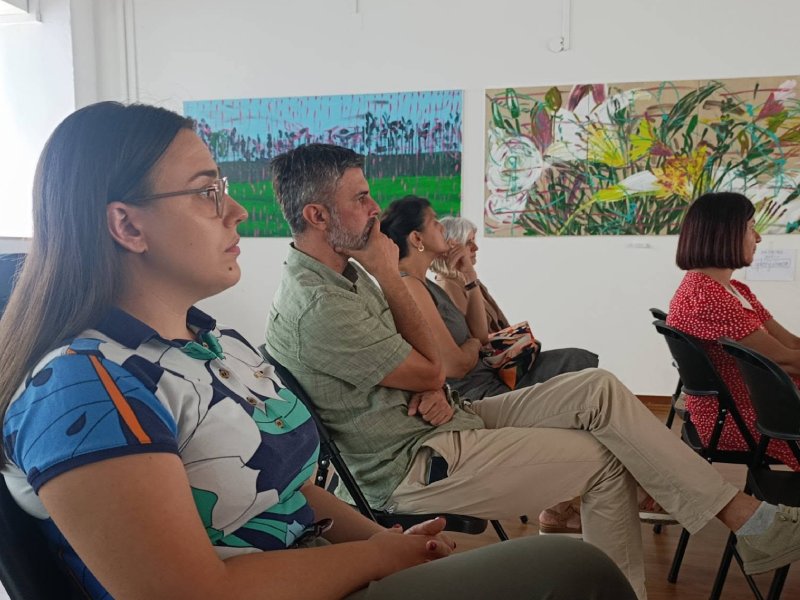
On 24 June 2026, Amica Educa, in cooperation with the Ministry of Education and Science of Tuzla Canton, organised the final presentation of the results of the MEET – Mental Well-being in Education for Disadvantaged Youth project, implemented under the Interreg Danube Region Programme.
The event brought together representatives of educational institutions, public authorities, civil society organisations, young people and other stakeholders who had been involved in different phases of the project throughout its 30-month implementation – from research and needs assessment, Youth Mental Health Labs and focus groups for the development of the Local Action Plan, to the development, piloting and validation of the project materials.
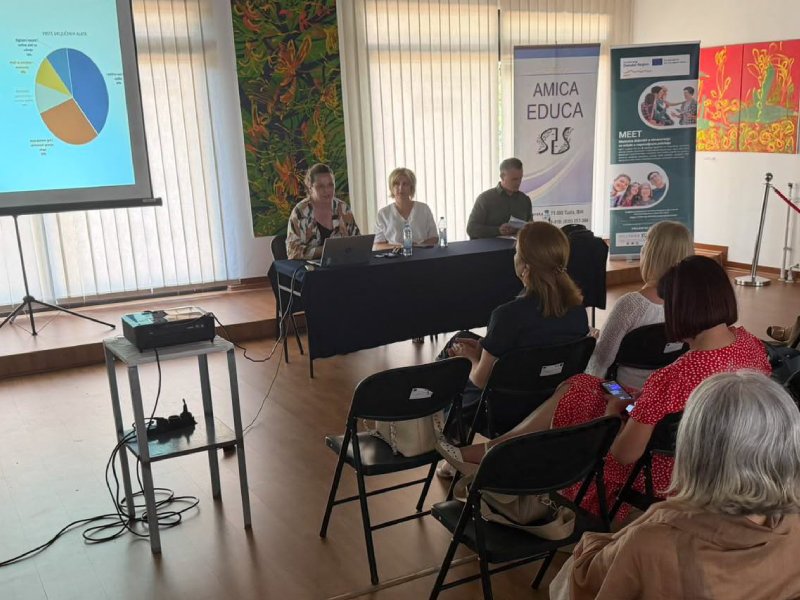
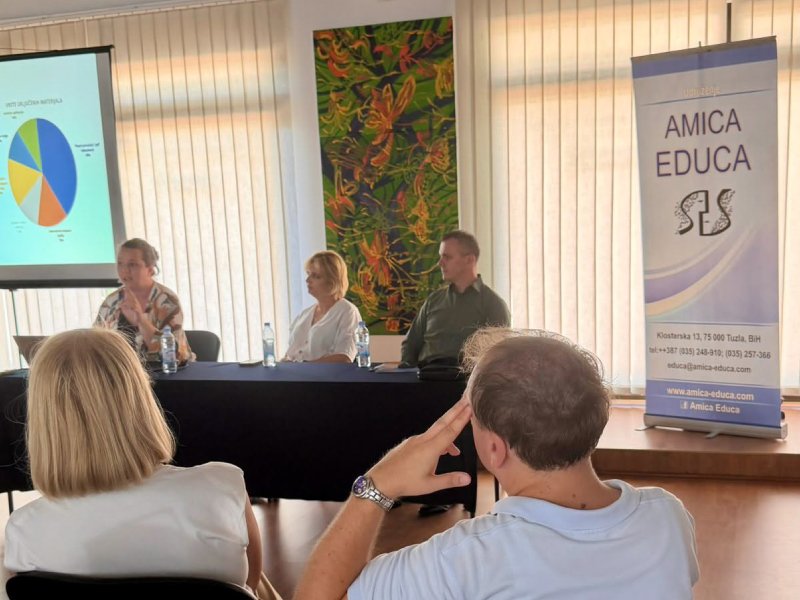
The following key project outputs were presented:
- Youth Mental Health Handbook, including the Youth Mental Health Labs Methodology and the Catalogue of Youth-Centred Good Practices;
- Toolbox for Professionals Working with Young People;
- Learning Materials for Young People;
- Danube Region Strategy for Youth Mental Health in Education;
- Local Action Plan for Youth Mental Health in Education for Tuzla Canton.
In addition to the project outputs, participants were introduced to the key findings and recommendations developed through the collaboration of partners from 11 countries in the Danube Region. The recommendations highlight the importance of strengthening preventive programmes, creating safe and supportive school environments, continuously building the capacities of teachers and professionals working with young people, improving cross-sectoral cooperation, and actively involving young people in decision-making processes that affect their lives and well-being.
The MEET project demonstrated that promoting youth mental health requires coordinated action by the education, health and social protection sectors, civil society organisations, local communities and young people themselves. The developed materials represent valuable resources for professionals, educational institutions and policymakers and will contribute to the further development of high-quality and accessible mental health support programmes for young people.
All project materials are available through the MEET Project Library:
https://interreg-danube.eu/projects/meet/library
We would like to thank all partners, institutions, professionals and young people whose knowledge, experience and active participation contributed to the successful implementation of the project and the development of its results. We believe that the partnerships established, the resources developed and the recommendations produced will provide a strong foundation for future joint efforts to promote youth mental health.