
On June 18, Amica Educa Association organized the Youth Forum titled “Tiny Steps, Big Changes” at the National Theatre Tuzla, marking the final activity of the first phase of the project “Empowering Young Women – The Beginning of Change.”
The Forum brought together young people, representatives of public institutions, civil society organizations, and private companies with the aim of fostering dialogue on the challenges and opportunities related to improving the position of young people, particularly young women, in the labour market, while also highlighting the importance of investing in their socio-economic empowerment.
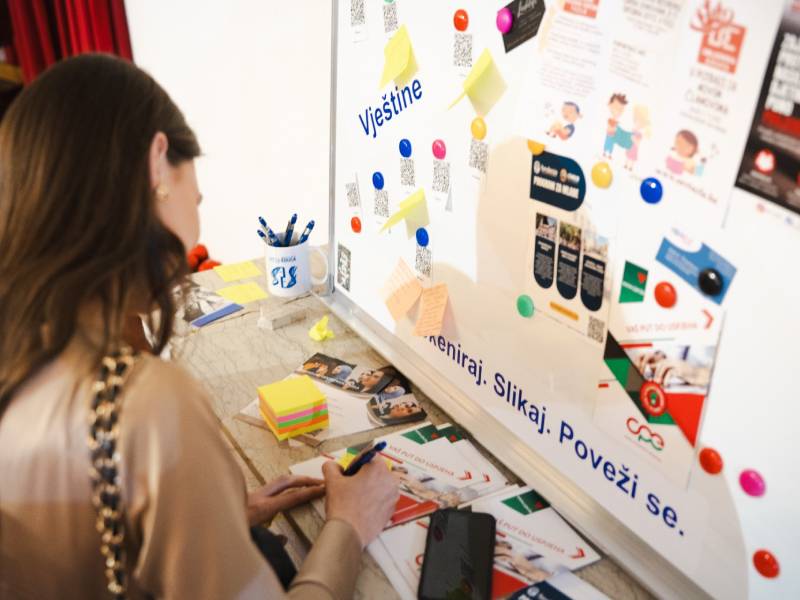

During the event, the results of the project were presented. Over the past three years, the project has provided support to 53 young women aged 15 to 35 through personal and professional skills development, psychosocial support, additional education and training opportunities, mentoring, and connections with the private sector.
Introductory presentations were delivered by:
- Amira Salković, Gestalt Psychotherapist
- Mersiha Mehić, CEO & Country Manager, MojPosao.ba / Alma Career BH d.o.o.
- Merima Dževdetbegović, CEO, Menprom Meat Industry Ltd. Tuzla
Through the panel discussion, participants explored the needs of the modern labour market, the competencies most valued by employers today, the importance of mental health and self-confidence for professional development, and the role of institutions, the education system, civil society, and the private sector in creating better opportunities for young people.
The experiences shared by project participants further confirmed that sustainable change requires continuous support, an individualized approach, and the creation of a safe environment in which young people can develop their potential, build self-confidence, and actively shape a better future.
Based on the discussions held during the Forum, participants highlighted several key recommendations:
- Strengthen cooperation between the education system, institutions, and employers to ensure that young people acquire knowledge and skills aligned with the demands of a rapidly evolving labour market shaped by technological advancements and emerging business trends.
- Increase access to career guidance programmes, mentoring opportunities, internships, and other forms of practical experience that facilitate young people’s transition from education to employment.
- In addition to formal education, greater emphasis should be placed on developing transferable (soft) skills such as communication, teamwork, responsibility, adaptability, initiative, and problem-solving, which employers increasingly recognize as key employability factors.
- Volunteer engagement, participation in projects, extracurricular activities, and other forms of civic engagement should be further promoted, as they demonstrate motivation, proactivity, and work readiness—qualities highly valued by employers.
- Mental health should be recognized as an important factor influencing young people’s employability, professional development, and active participation in society.
- Special attention should be given to young women from vulnerable groups who face multiple barriers in education, employment, and socio-economic integration.
- Continued investment is needed in programmes that simultaneously develop life and professional skills, strengthen self-confidence and resilience, and encourage active participation in the community, as such programmes contribute to more sustainable and long-term outcomes.
The Forum once again confirmed that this holistic approach should serve as a guiding direction for all stakeholders involved in preparing young people for successful participation in the labour market.